Frustrated trying to find the right words to describe your career talents? Join the club – so are recruiters. Recruiters are drowning in AI-produced resumes, cover letters, and interview responses.

There IS a way to stand out in this tough job-search market: show your work. In just two years, from 2022 to 2024, the number of employers surveyed by Test Gorilla reporting using some form of skills-based hiring jumped from 56% to 81%.
Proof of Work is Your New Bestie
What “skills-based hiring” means is that recruiters are looking for quantifiable evidence that you can do what you say. As Taufiq Shaikh, Head of Product at BizHire, said to a blog audience of recruiters, “To identify high output talent, you need to look for ‘Proof of Work.’ High-output individuals leave a trail of evidence that is distinct from the general candidate pool.”
Proof-of-work tools move you from TALKING about your talents to demonstrating them. They’re also asynchronous, so you can work on them when you want, how you want.
The Tools And How They Work
In this post, I’ll show you how to use four tools that are readily accepted and relatively easy to learn. Building these tools provides hiring managers with a razor-sharp picture of what you offer.
The tools are:
Portfolios
Case Studies
Prototypes
Screencasts
Let’s see how each works.
Portfolios
What It Is: Online showcase of your best work.
How To Use It: To get started, find a free or low-cost platform like Wordpress.com, Google Sites, or Notion. Organize your samples into categories recognizable to recruiters or hiring managers. Update your portfolio regularly as you gain samples.
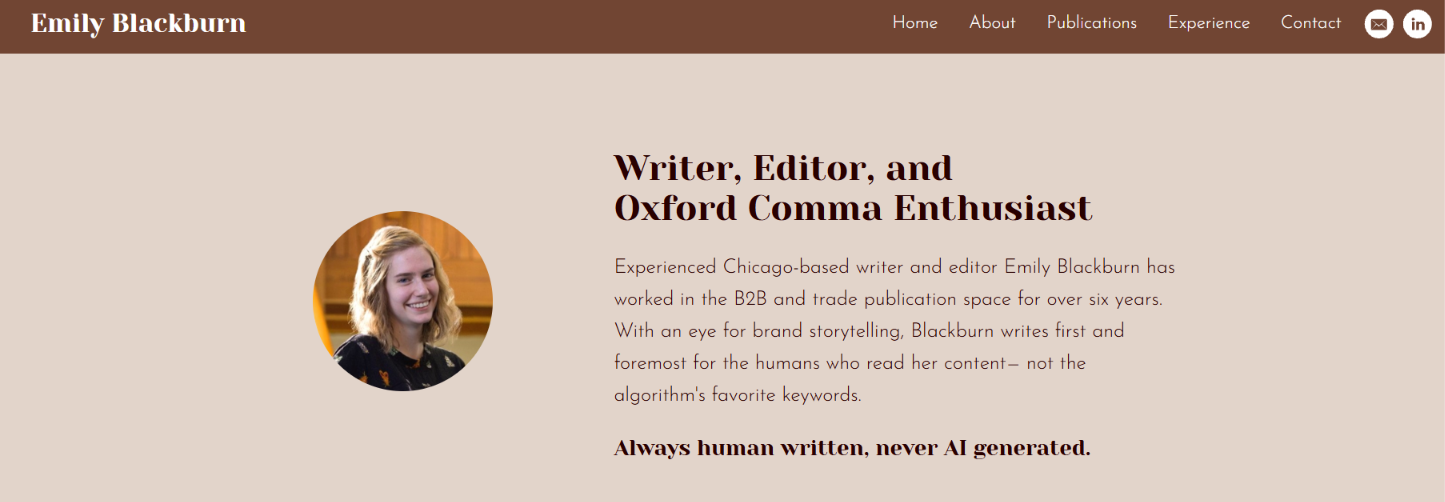
What It Looks Like In Action: Emily Blackburn, who writes and edits for business-to-business (B2B) and trade publications. She uses Journo’s portfolio platform to place her professional value proposition dead-center on her home page.
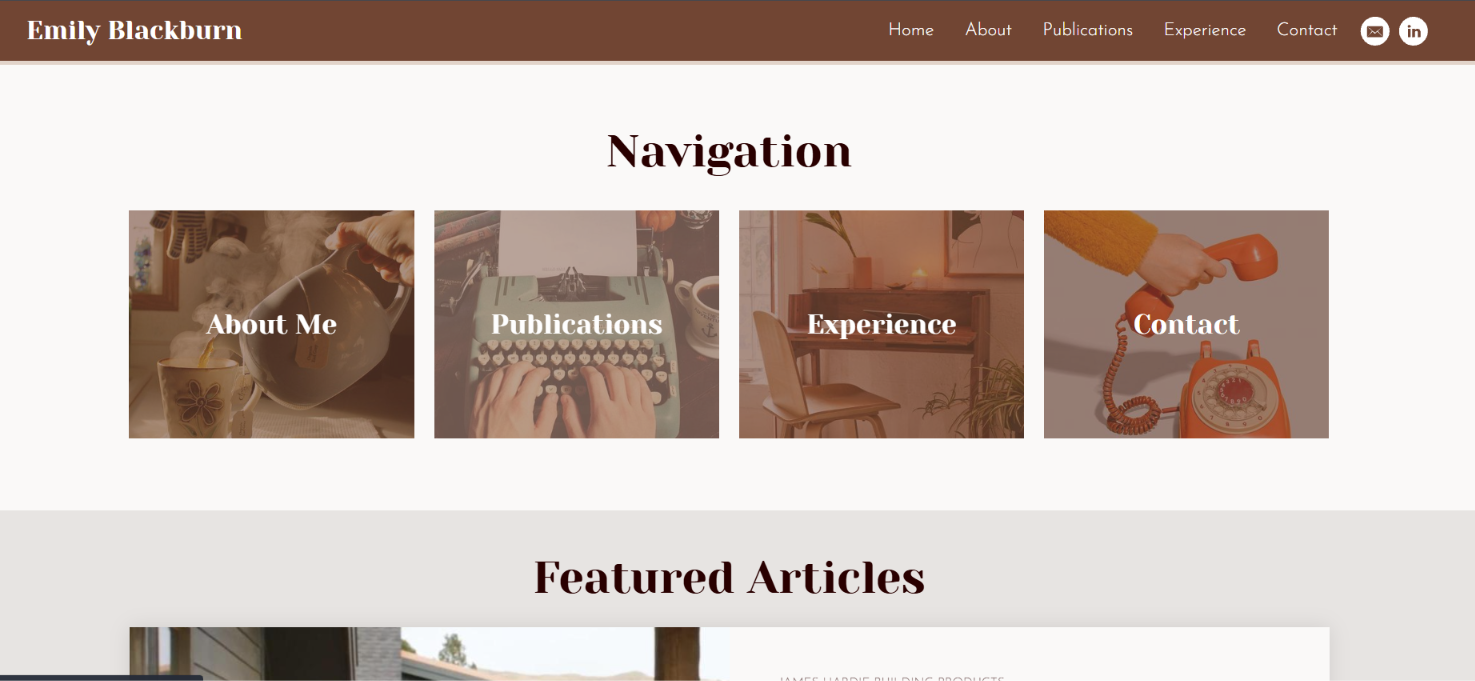
She also categorizes her pages neatly, allowing recruiters to view samples quickly.
One Step To Take Today: Sign up for an account with a free platform provider, such as Notion or Google Sites. Post three examples of your best work.
Case Studies
What It Is: A structured walk-through of a successful project to which you contributed significantly.
How To Use It: Case studies illustrate how you assess and solve problems. Keep it easy to follow, quick to navigate and simple to share.
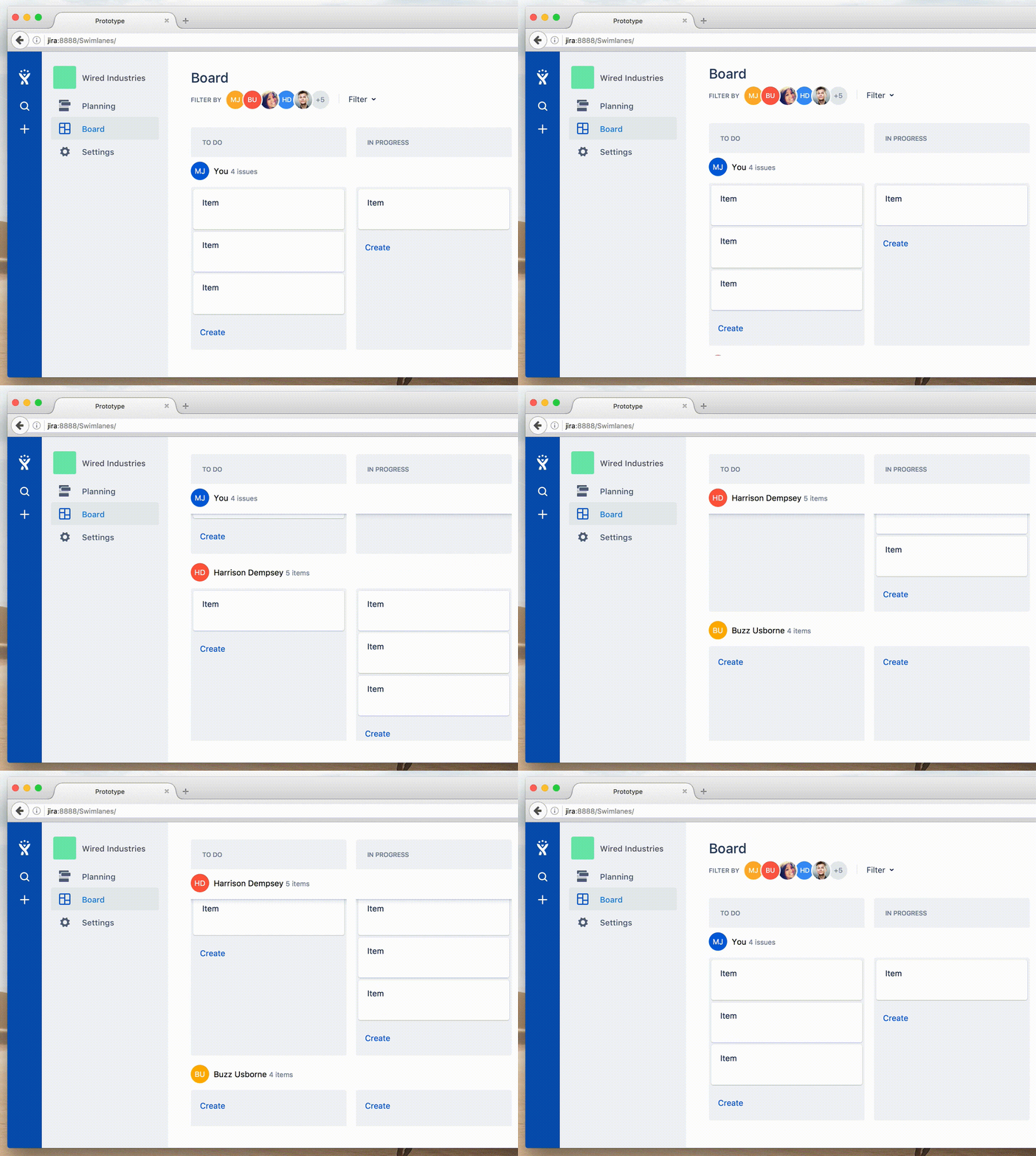
What It Looks Like In Action: Buzz Usborne developed a strong case study of how his UX team at Atlassian redesigned JIRA to make the software ticketing system easier to learn.
His case study uses headings and text to move the reader through the study. He also uses animated gifs to demonstrate visual attributes inexpressible with a static picture. This GIF shows how shadowing helps users understand where their data is going when they scroll.
One Step To Take Today: Open a blank presentation in Microsoft PowerPoint or equivalent presentation program. Organize a recent career success story into a case study.
Prototypes
What It Is: A mock-up demonstrating your ability to create a convincing deliverable
How To Use It: Research a problem in your target company’s domain. Identify areas for improvement or innovation. Create a model providing the improvement. Keep it short and open to feedback.
What It Looks Like In Action: Substack author Gabriela Flax offers ideas for creating prototypes in numerous industries, including these two:
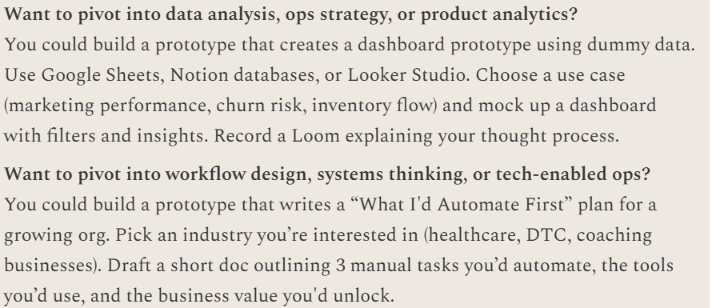
Two keys to building a useful prototype are 1) find a way to have your prototype showcase your thinking, and 2) get it in front of people who can critique it.
One Step To Take Today: Identify a problem you can help solve and determine the type of prototype (report, flowchart, info dashboard, marketing campaign) to best show proof of work.
Screencasts
What It Is: A recording of you doing something online on a screen. It can offer proof of your work, of your ability to use a specific computer program, and it can also demonstrate your ability to analyze a problem, coach someone, or provide training.
How To Use It: Determine what to demo. Break your demonstration into steps. Write a script or sketch storyboards for longer sequences. Set appropriate expectations for yourself: Rehearse your screencast, or allow for multiple takes. Keep your screencast three minutes or shorter.
What It Looks Like In Action: Utah math teacher Emma Chiapetta uses screencasts to provide feedback to her statistics-class students.
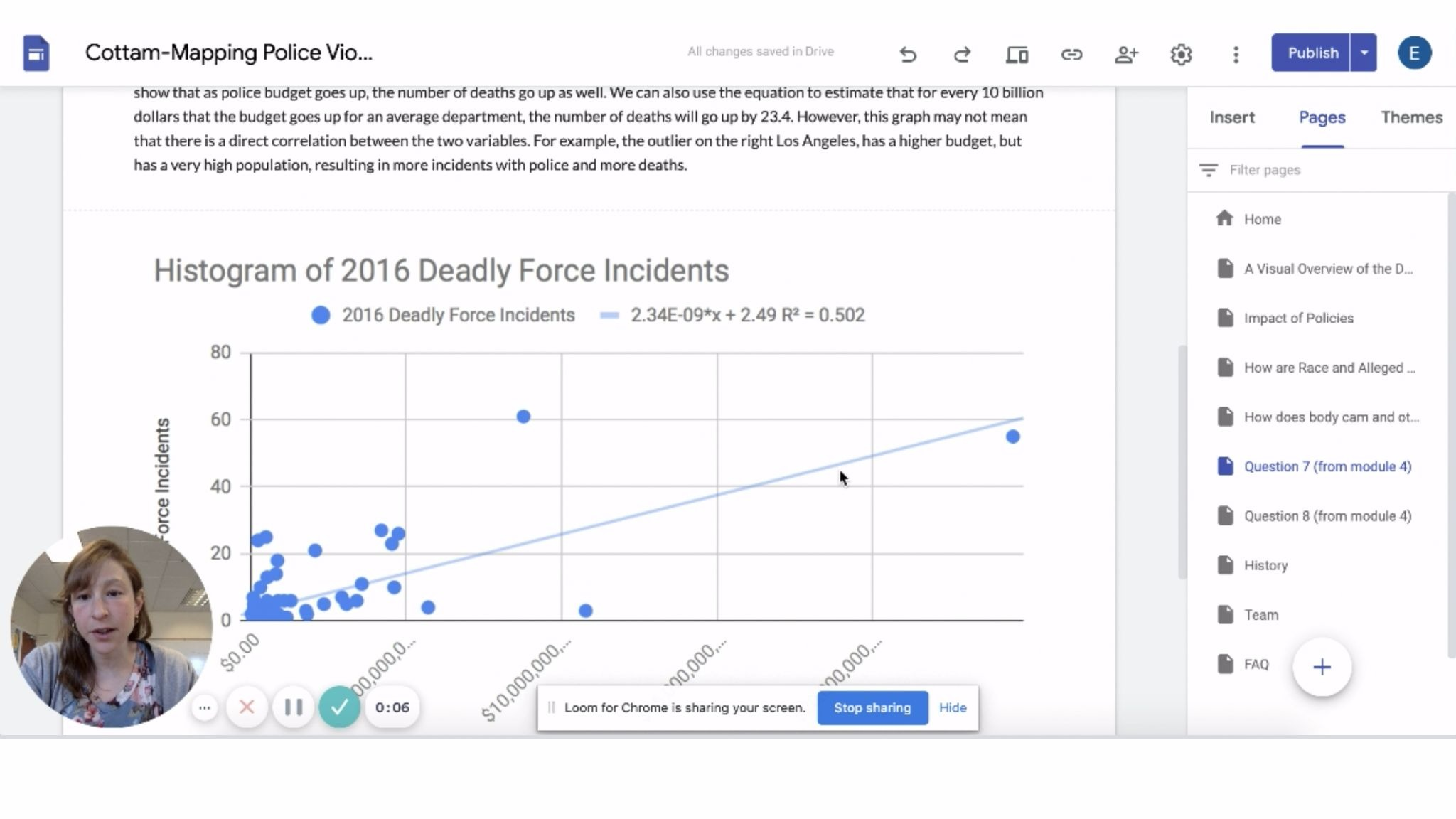
One Step To Take Today: Use the Snipping Tool in Microsoft (or a parallel tool for other operating systems) to record short test screencasts just to get your feet wet.
Strategy Is The Killer App For Effectively Demonstrating Your Skills
The real key to making a portfolio, case study, prototype, or screencast effective is understanding how to employ them strategically. In my own life, I’ve learned to think of resume writing as a special kind of user-experience content design project. One primary caveat of UX writing is that you can’t create good content for a user you know nothing about.
As I’ve studied UX content design more deeply, I’ve learned career tool strategy looks like this:
Who will encounter my career tool? –-> How will hiring someone meet their needs? –-> How can I display proof-of-work samples to demonstrate I meet the need? –-> How can I provide the right amount of context to explain enough but not too much?
As journalist and entrepreneur Bridget Thoreson, who runs the MyCareerRiver.com website, puts it, you need to identify and present the “20 percent of your career a potential employer wants to hear about.”
But How Do I Get Them To Look At My Career Tool?
Put a link to your career tool on your resume. Add a link at the top of the page, along with your city/state/ZIP code, your phone number and LinkedIn profile URL. Here’s an example:

Consider a free/low-cost portfolio option for showcasing your case studies, prototypes, or screencasts. Most accept photos, videos, slide decks, or PDFs. Some will let you customize your URL. You can give it a more appropriate name if “portfolio” isn’t relevant, like “Case Study Archive” or “Video Demo Reel.”
The Best News About Proof Of Work
You probably noticed it’s a lot of effort to build proof-of-work career tools, but the ability to champion your work victories is itself a skill that puts you ahead of most job seekers. Not only do you understand your value to a prospective employer at a granular level – you brought the receipts!